
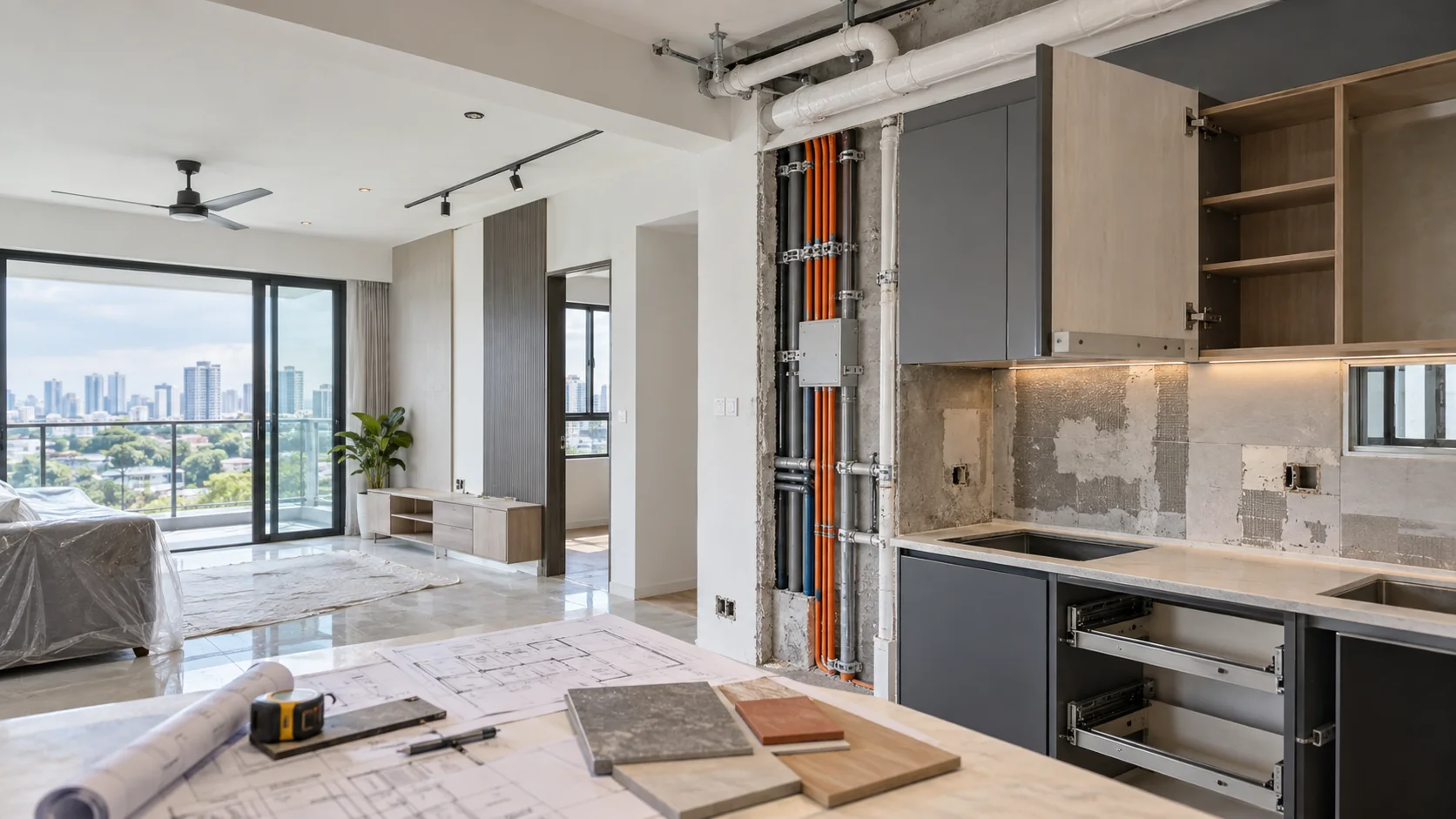
RM80,000 can disappear quickly when every room has a wishlist. The safest way to protect the budget is to spend first on work that is hidden, difficult to replace or used every day. Decorative items that can be added later should come after the home is safe, coordinated and practical.
For a simple home renovation, the priority order is usually: water protection, electrical safety, plumbing, air-conditioning routes, proper surface preparation, practical carpentry and reliable hardware. The exact order changes with the condition of the property.
The simple rule: protect what is hard to redo
Ask one question before reducing any item:
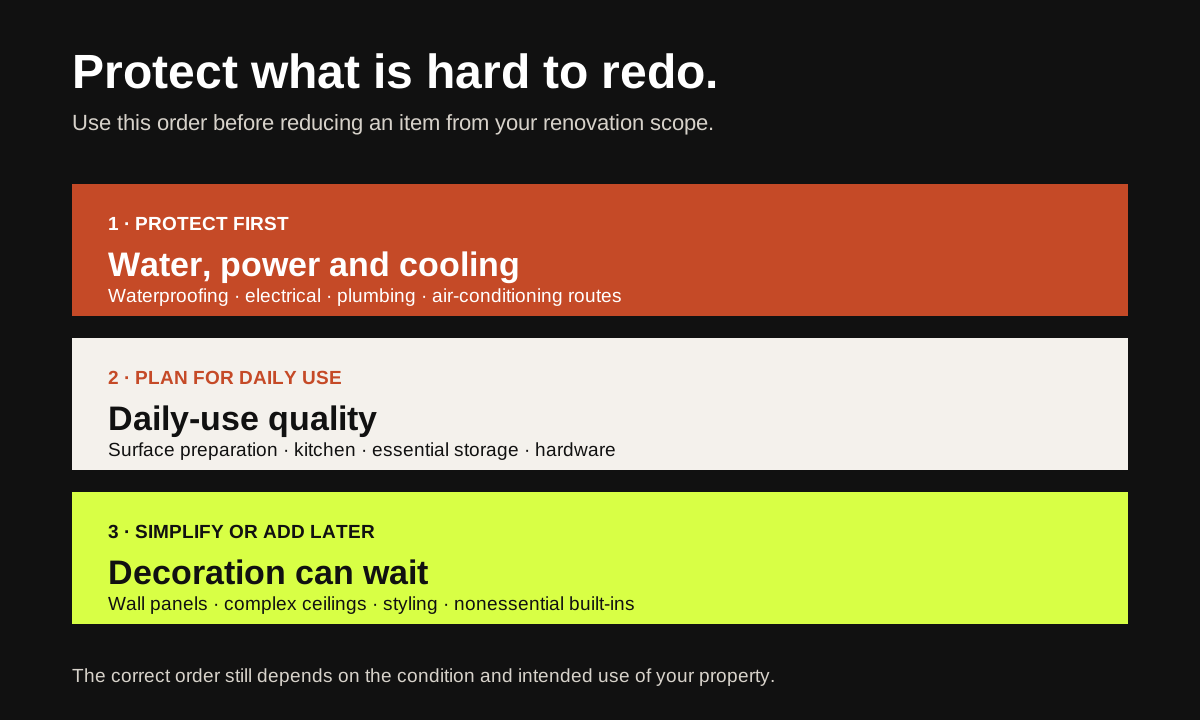
If this fails or needs changing later, what completed work must be opened up?
Changing a loose dining chair is easy. Repairing a concealed leak behind new cabinets is not. Replacing a decorative pendant is simple. Adding an overlooked power point after plaster ceiling and wall finishes are complete is disruptive.
This rule helps separate real savings from decisions that only move the cost to a later date.
1. Do not save blindly on waterproofing
Waterproofing deserves priority when bathrooms, balconies, kitchens or other wet areas are being opened up or rebuilt. The correct system depends on the area and the proposed work. Preparation, upturns, joints, outlets and testing are part of the result, not only the waterproofing product.
If the existing wet area is sound and will not be disturbed, retaining it may be the better-value decision. Do not hack a serviceable bathroom only to follow a trend. If it must be rebuilt, define the waterproofing and testing scope clearly.
Questions to ask:
- Which wet areas are being disturbed?
- What preparation and waterproofing system is included?
- How will the work be tested before tiles and fittings cover it?
- Who is responsible for making good if connected work changes?
2. Do not treat electrical work as a decorative item
Electrical planning starts with how the home will be used. List air-conditioning units, water heaters, kitchen appliances, workstations, entertainment equipment and charging needs before positions are fixed.
The Energy Commission advises homeowners to appoint a registered electrical contractor for residential inspection and internal wiring work. This is an area to check credentials and scope, not simply choose the lowest line item.
Plan points before ceiling and carpentry work. Confirm whether the quotation covers wiring, points, switches, distribution-board work, testing, fittings and making good. Similar wording can hide different inclusions.
3. Protect plumbing and leak-prone connections
Water supply, discharge routes and connections should be checked before cabinets conceal them. A low-cost fitting is not a saving if access later requires removing a kitchen cabinet or bathroom finish.
Prioritise sound pipework, accessible valves, proper falls and reliable connections. Keep maintenance access where equipment, traps or valves may need attention.
For a subsale home, inspect existing plumbing before assuming it can remain. Stains, low pressure, slow drainage and previous alterations deserve attention during the site review.
4. Plan air-conditioning before the room is finished
Air-conditioning affects more than the indoor unit on the wall. Its piping, drainage, power, outdoor unit, ceiling coordination and maintenance access should be decided together.
A visually tidy route that is difficult to service is not good long-term value. Confirm equipment quantities and specifications, pipe lengths, drain route, electrical points, concealment and related making good in the proposal.
In an RM80,000 scope, it is usually better to install a simple, coordinated solution than spend on a complex decorative ceiling that clashes with the air-conditioning route.
5. Do not skip surface preparation
Paint, laminate and tiles only look as good as the surfaces beneath them. Uneven walls, loose finishes, moisture problems and poor joints can show through the final work.
Surface preparation is especially important in a subsale property. The quotation should distinguish light preparation from repairs that can only be confirmed after old finishes are removed.
This does not mean every wall must be rebuilt. It means the expected finish and the preparation needed to achieve it should be agreed.
6. Spend on hardware you touch every day
Cabinet hinges, drawer runners, handles and frequently used doors experience repeated movement. Use suitable hardware in high-use areas, particularly the kitchen and main wardrobe, before adding expensive internal accessories to every cabinet.
Good value is not the highest specification everywhere. A practical approach may use stronger hardware in daily-use zones and simpler fittings in low-use storage.
Ask for the hardware type or series to be identified in the proposal. Soft-close included does not explain durability, quantity or where it applies.
7. Protect the kitchen work zone before decorative carpentry
The kitchen needs a workable sequence, enough preparation space, suitable power and water positions, ventilation planning and durable surfaces around frequent use.
Prioritise the base cabinet layout, worktop, sink area, appliance clearances and essential storage. Display shelves, decorative panels and elaborate feature details can follow if money remains.
In a small condo, a clear circulation path may be more valuable than adding an island simply because it appears in inspiration images.
What can usually be simplified or added later?
The right answer depends on your household, but these items are often easier to phase:
- Loose furniture and decorative lighting
- Curtains, artwork and styling pieces
- Decorative wall panels and moulding
- Complex ceiling shapes and extensive light troughs
- Full-height built-ins in every room
- Premium internal cabinet accessories
- Feature finishes that do not improve durability or function
- Smart-home extras that are not part of essential safety or access
Plan any future electrical points or supports before closing walls and ceilings. Phasing is useful only when later work will not damage the finished renovation.
A sensible RM80,000 priority sequence
This is a decision sequence, not a fixed package or price allocation.
| Priority | Decide first | Why |
|---|---|---|
| 1 | Existing condition and management requirements | They determine what can be retained and what approval is needed. |
| 2 | Wet-area, plumbing and electrical needs | These affect safety and work hidden behind finishes. |
| 3 | Air-conditioning and M&E routes | They must coordinate with ceilings, walls and carpentry. |
| 4 | Kitchen and essential storage | These support daily use and need accurate dimensions. |
| 5 | Selected ceiling and lighting | Keep it purposeful and coordinated. |
| 6 | Surface preparation and finishes | Agree the expected result and repair assumptions. |
| 7 | Decoration and items that can wait | Add them after essential scope and uncertainty are covered. |
Keep a reasonable amount uncommitted until the scope and existing condition are better understood. The correct allowance depends on the property. An older subsale home usually carries more uncertainty than a new unit with serviceable finishes.
How priorities change in a new and subsale home
New condo
Check defects and management rules first. If the developer's floors, bathrooms, doors and electrical provision are suitable, preserve them. More of the budget can then support daily-use carpentry, air-conditioning, selected ceiling work and lighting.
Subsale condo or house
Begin with inspection and retention decisions. Allow for removal, repair, electrical and plumbing checks, and surface preparation before committing heavily to visual additions. The best-value result may contain fewer new built-ins because the existing property needed more essential work.
Three budget traps to avoid
Choosing from pictures before confirming the site
An inspiration image does not show the existing pipes, electrical capacity, ceiling height or building rules. Use it to discuss the look, then test whether the idea suits the property.
Comparing totals without matching scope
One quotation may include protection, disposal, testing and cleaning while another does not. Compare quantities, materials, exclusions and responsibilities, not only the total.
Making changes after work starts
Late changes can affect finished or ordered work. CIDB Malaysia's homeowner guidance recommends that variations are documented and agreed in writing, including their effect on price and time.
Frequently asked questions
Should I spend more on carpentry or renovation work?
Complete the necessary hidden and service work first. Then prioritise carpentry in areas with the greatest daily benefit, usually the kitchen and essential storage. Loose furniture can fill lower-priority needs later.
Is an expensive finish always more durable?
No. Suitability, preparation, installation and maintenance matter alongside price. Choose finishes for the location and expected use rather than assuming the highest price is automatically the best fit.
Should air-conditioning units be included in the RM80,000 budget?
They can be, but the quantity, capacity, brand or allowance, piping length, drainage, electrical work and installation conditions must be stated. This guide does not assume an unlimited equipment allowance.
What if my essential scope already uses most of the budget?
Reduce decorative scope or phase items that can be installed later. Do not quietly remove necessary work while keeping the same visual wishlist. A smaller complete scope is usually easier to control than many unfinished priorities.
Want to make your RM80,000 work harder?
Bric & Bricks can review the property, your must-haves and the work that should be completed first. We begin with a call and, for suitable enquiries, arrange a free site visit before defining the design or design-and-build scope. We aim to respond to enquiries within 24 hours.
References
- Suruhanjaya Tenaga: Who to Appoint for Residential Wiring Work
- Suruhanjaya Tenaga: Guidelines for Electrical Wiring in Residential Buildings
- CIDB Malaysia: Construction Contract Guidance for Homeowners
- Strata Management Regulations 2015, Third Schedule
- Qanvast Malaysia: How Much Does It Cost to Renovate in Malaysia?